
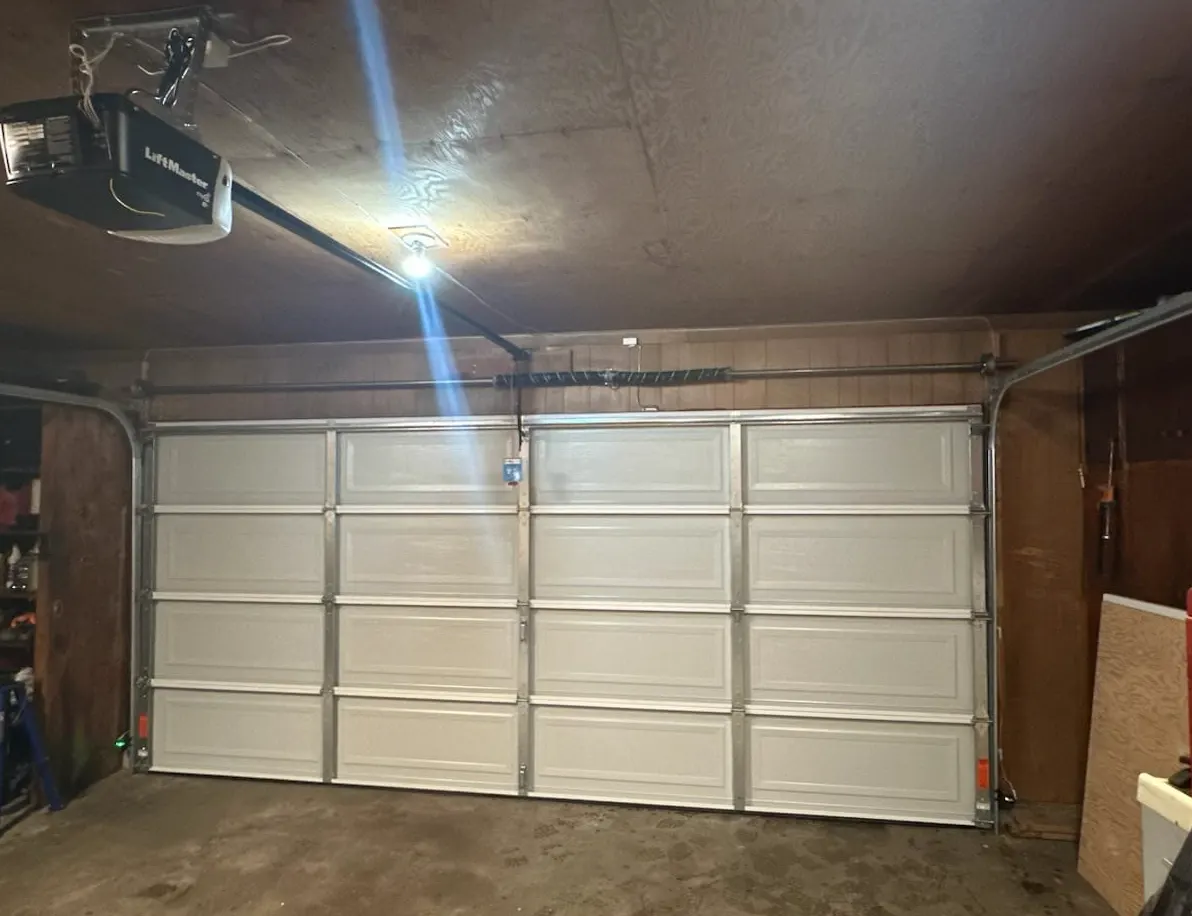
What a Technician Hears on an Opener Call
Most opener calls start the same way: a homeowner describes a grinding or slapping sound that gets louder every month, or the opener just stopped lifting the door altogether. On inspection, it's usually a worn chain drive that's rattled against its rail for years, a stretched belt that's starting to slip, or a motor that's seized up after the gear and sprocket assembly finally gave out from heat and dust buildup. By the time we're called, the homeowner has usually already decided they want "whatever's quietest" - but the right choice depends on more than noise. Garage location, door weight, and how much humidity and salt air the unit sees over the years all factor in.
Chain Drive
Chain drives use a metal chain, similar to a bicycle chain, to pull the trolley along a rail. They're the most common opener type because they're affordable and strong enough for heavy doors, including insulated steel doors chosen for wind resistance.
- Noise: The loudest of the four. Metal-on-metal contact and chain vibration carry through the rail into the ceiling, which is noticeable if the garage sits under or next to a bedroom.
- Price: Typically the lowest upfront cost in national ranges for residential openers.
- Lifespan: Chains hold up well mechanically, but in coastal air the metal links and sprocket can start to show surface rust over several years if not kept lubricated.
Belt Drive
Belt drives replace the chain with a reinforced rubber or polyurethane belt. The mechanism is otherwise similar, but the softer material absorbs vibration instead of transmitting it.
- Noise: Noticeably quieter - often the main reason homeowners upgrade from chain to belt, especially with attached garages.
- Price: Usually a modest step up from chain drive models.
- Lifespan: Belts don't rust, which is a real advantage in salt-air areas, but constant heat and UV exposure near the garage opening can dry out and crack a belt faster than it would in a cooler, drier climate. A belt stored and used in a hot, humid garage should still last many years, just plan to inspect it periodically for surface cracking.
Screw Drive
Screw drive openers move the trolley along a threaded steel rod instead of a chain or belt. Fewer moving parts means less to maintain in theory.
- Noise: Moderate - quieter than chain, louder than belt, with a distinct whirring sound.
- Price: Comparable to chain or belt drives, depending on the model.
- Lifespan: The trade-off here is sensitivity to temperature. The lubricant on the threaded rod can thin out faster in sustained heat, so screw-drive units in direct sun or poorly ventilated garages may need more frequent re-lubrication than the spec sheet suggests for a milder climate.
Direct-Drive (Belt-and-Motor-in-One)
Direct-drive openers have a stationary chain or belt with the motor itself traveling along the rail. It's a newer design with very few moving parts to wear out.
- Noise: The quietest option by a clear margin, which matters if the garage shares a wall with a living space or a nursery.
- Price: Generally the highest upfront investment of the four.
- Lifespan: With fewer components exposed to moving friction, these units tend to hold up well in humid conditions, and there's less hardware for salt air or swelling wood frames to affect.
Trade-Offs in Plain Terms
- If budget is the priority and the garage is detached or far from living space, chain drive still does the job reliably.
- If quiet matters and the garage sits under a bedroom, belt or direct-drive are worth the extra cost.
- If the garage gets heavy sun exposure or poor airflow, screw drives need closer attention to lubrication.
- For homes near the coast with more salt exposure, belt and direct-drive hold up better against corrosion than exposed metal chain and sprocket assemblies.
What We'd Recommend for Typical Homes Here
For most attached garages in this area, a belt drive hits the best balance of quiet operation, reasonable price, and resistance to the humidity and salt air that cause rust on exposed chain hardware. Detached garages where noise isn't a concern can still get excellent value from a chain drive, provided it's inspected and lubricated on a regular schedule. Either way, the opener should be rated to handle a wind-rated door's weight without straining the motor, which matters more here than in drier, calmer climates.
When to Call Miami Gardens Overhead Door Co
If your current opener is grinding, slipping, or struggling to lift the door smoothly, it's worth having it looked at before it fails completely, often during a storm when you need it most. Our Garage Door Opener Installation service covers chain, belt, screw, and direct-drive models, matched to your door's weight and your garage's exposure to heat and moisture. We also offer Garage Door Maintenance & Tune-Up visits to catch early signs of chain rust, belt wear, or lubricant breakdown before they turn into a dead opener on a Saturday morning.
Call Miami Gardens Overhead Door Co today to get an honest recommendation on the right opener for your home in Miami Gardens, FL.